All posts

Part 107 & Training

How to Pass the Part 107 Test on the First Try

September 1, 2026

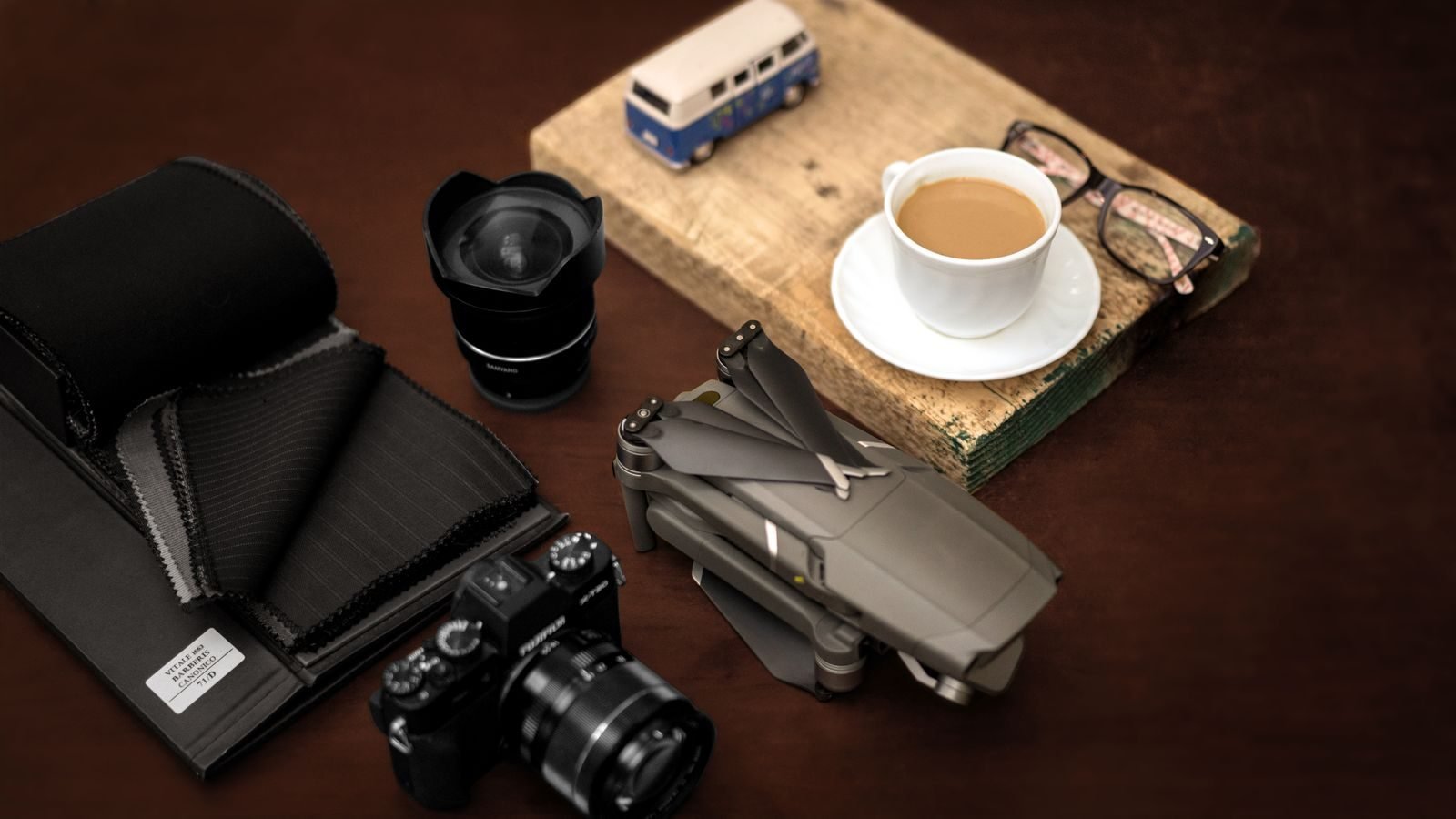
A DJI drone and a cup of coffee on a dark desk while studying for the FAA Part 107 test

I have taken more FAA knowledge tests than I care to count, and the Part 107 is the one people psych themselves out over the most. It is a 60 question multiple choice test, you get two hours, and you need a 70% to pass. That is it. There is no checkride, no oral exam, nobody watching you fly. And still, people fail it every day, almost always for the same reasons.

Quick answer: to pass the Part 107 test on the first try, put in 15 to 25 hours of focused study, spend most of that time on airspace and charts because that is what actually fails people, and do not book your $175 exam until you are scoring 85% or higher on full practice tests two or three times in a row.

This is the plan we hand to every student who asks. It is not fancy. It works because it is built around how the test is actually written, not around what feels productive.

Know what the test is before you study for it

The test is officially called the Unmanned Aircraft General, Small, or UAG. You take it in person at a PSI testing center, the same company that runs most FAA written exams. You book it yourself on PSI’s website, pay $175 when you schedule, and show up with a government ID. No drone required. Nobody cares if you have ever flown one.

The FAA publishes the rough topic weights, and they matter more than any study trick:

  • Operations: 35 to 45 percent of the test
  • Regulations: 15 to 25 percent
  • Airspace and sectional charts: 15 to 25 percent
  • Weather: 11 to 18 percent
  • Loading and performance: 7 to 11 percent

Read that again before you buy anything. Operations and regulations are close to half the test, and they are mostly memorization. Airspace and weather are smaller slices, but they are the slices that require actual understanding, and they are where the failures concentrate. A bad study plan spends equal time on everything. A good one spends time where the risk is.

The three week plan that works

If you have no aviation background, plan on two to three weeks of evenings, or two serious weekends plus a week of review. Here is how we lay it out.

Week one: regulations and operations

Start with the boring stuff, because it is the biggest chunk of the test and the easiest to bank. Part 107 itself is short. Read the actual rule summary on the FAA’s site, then work through the operational questions: who can be a remote pilot in command, what a visual observer does, the 400 foot ceiling, the 100 mile per hour speed limit, daylight and civil twilight, flying over people, flying from a moving vehicle, right of way.

A lot of this is common sense once you see the pattern. The FAA’s pattern is simple: the manned aircraft almost always wins, the person on the ground almost always wins, and you are always responsible. When a regulations question stumps you, pick the answer that sounds like the most conservative, safest option. You will be right more often than not.

Do not skip the paperwork side. Registration rules, Remote ID, accident reporting, what counts as a serious injury. These are free points. People lose them because they only studied the fun parts.

Week two: airspace, charts, and weather

This is the week that decides whether you pass. Airspace questions show you a chunk of a sectional chart and ask things like: what is the floor of the Class E airspace here, what does this number in parentheses mean, can you fly at this spot without authorization. If you have never read a sectional chart, it looks like a bowl of spaghetti. Give it three or four honest hours and it starts to resolve into logic.

Learn the airspace classes cold: B, C, D, E, G, what each one demands from you, and how each one is drawn on the chart. Learn the weird ones too, because the test loves them: military operation areas, restricted areas, warning areas, stadium TFRs, the dashed magenta lines that change the Class E floor to the surface.

For weather, you need to read a METAR and a TAF at a basic level. Not like an airline dispatcher. Just enough to pull wind, visibility, ceiling, and temperature out of one. Learn what density altitude is and why hot days at high elevation hurt performance. Learn the weather minimums from the rule itself: three statute miles visibility, 500 feet below clouds, 2,000 feet laterally.

Week three: hammer practice questions

The last stretch is volume. Take full 60 question practice tests under a timer, review every single miss, and figure out which topic each miss belongs to. One bad topic is a pattern. Go back and restudy that topic, then test again.

Your target is not 70%. Your target is 85% or better, three times running, on tests you have not memorized. The real exam will not use the exact questions you practiced, so a memorized 95% means nothing. A genuine 85% means you have margin for the weirdly worded questions the FAA is famous for.

We built a free 60 question practice test with the real pass mark and explanations for every answer, specifically so students can check readiness before spending the $175. Take it cold before you start studying if you want a baseline, then again at the end of each week.

The topics that actually fail people

After watching a lot of students through this, the same five areas cause almost every failed attempt:

  • Airspace floors and ceilings on charts. Not the classes themselves, but reading the numbers off a real sectional excerpt under time pressure.
  • Latitude and longitude. The test still asks you to locate a coordinate on a chart. Ten minutes of practice fixes it. Nobody practices it.
  • METAR and TAF decoding. Students memorize the format, then freeze when the test asks what the weather will be at a specific hour inside a TAF’s validity window.
  • Load factor and performance. Small slice, strange questions. Know what a load factor is and what happens to stall speed in a bank.
  • Crew resource management and the IMSAFE checklist. Operations questions about judgment, fatigue, and risk. Easy points if you read the material, annoying losses if you skipped it.

Notice what is not on that list: drone hardware. The test barely cares about your aircraft. It cares whether you can share airspace with airplanes without becoming a problem.

Test day logistics nobody mentions

Before you can even book the exam you need an FAA Tracking Number, called an FTN, which you get by making a free account in IACRA, the FAA’s airman application system. Do this a week ahead, not the night before. The PSI booking flow asks for it, and creating an IACRA account at midnight before a morning exam is a special kind of stress you do not need.

Bring a government issued photo ID. You cannot bring your phone, notes, or a smart watch into the testing room. PSI gives you scratch paper, a pen, and a basic calculator if you want one. There is a screen magnifier and a legend booklet for the chart questions, which you should actually use. Half the chart questions get easier the moment you look up the symbol instead of guessing from memory.

Two hours sounds generous and it is. Use it. Answer everything, flag the ones you are unsure about, then go back. Your first instinct on regulation questions is usually right. Your first instinct on chart questions is worth double checking against the legend.

After you pass

Passing the test does not hand you a certificate on the spot. You go back into IACRA, submit the application with your test ID, and the TSA runs a background check. A temporary certificate shows up in IACRA, usually within a couple of weeks, and the plastic card follows in the mail. You can fly commercially with the temporary.

Then register your drone if it weighs 0.55 pounds or more, which is nearly everything with a real camera, mark the registration number on the airframe, and make sure the aircraft is Remote ID compliant. After that, you are legal. The learning curve that matters for actually making money starts there, and it is a different curve than the test.

If you fail, it is annoying but not fatal. You wait 14 calendar days, pay the $175 again, and retake it. The report you get after a failed attempt breaks down which subject areas you missed, which is genuinely useful. Still, it is cheaper to study an extra week than to buy the test twice.

Common questions

What is a passing score on the Part 107 test?
You need 70% or better, which is 42 of the 60 questions. You get 120 minutes, which works out to two minutes per question. Most well prepared students finish with 30 or 40 minutes to spare.
How much does it cost to retake the Part 107 test?
The full fee again, $175 paid to PSI each time you sit for it, and you have to wait 14 calendar days before retesting. Failing once turns a cheap test into a $350 lesson.
How long should I study for the Part 107 test?
Most people with no aviation background need 15 to 25 hours of real study, spread over two to three weeks. Pilots and people with airspace exposure can compress that to a focused weekend.
Can I take the Part 107 test online from home?
No. The initial Unmanned Aircraft General test is taken in person at a PSI testing center. The recurrent training you do every 24 months after that is online and free through the FAA’s safety website.

Want the structured version?

Operator Core walks the whole test in order, with the chart and weather drills that take most of the study time. The free practice test tells you where you stand today.


All posts

Roof Documentation

Drone Roof Inspections in Santa Clarita: Why Contractors Are Making the Switch

August 26, 2026

Drone Roof Inspections in Santa Clarita: Why Contractors Are Making the Switch

If you run roofing or general contracting work, the roof inspection is the bottleneck at the front of every job. Somebody has to get up there, look at it, and come back down with enough information to write a number. That trip costs time, it carries risk, and it produces almost no record of what was actually seen.

Quick answer: A drone roof inspection puts high-resolution imagery of every slope and detail area in your estimator's hands the same day, without the ladder trips that exist only to look. For Santa Clarita and greater Los Angeles contractors, it means faster bids, less fall exposure, and a dated visual record for claims and disputes.

Drone documentation changes all three of those. Here is how it plays out on real jobs.

Bids go out faster

A drone can be in the air within a few minutes of arriving on site and can cover an entire roof, including the sections that are awkward or unsafe to reach on foot, in a single pass. You get high-resolution imagery of every slope, every penetration, and every transition, plus overheads that make it straightforward to work out square footage and layout.

The practical result is that the estimator is looking at complete imagery the same day instead of waiting on a second site visit for the details the first one missed. When you are competing on a bid, being first with a credible number is worth real money.

Fewer people on ladders

This is the one that gets attention from anybody who has dealt with a workers' comp claim. Falls are the recurring serious-injury risk in roofing work, and every avoidable ladder climb is exposure you chose to take on.

A lot of the climbs are avoidable. Initial assessments, bid walks, progress checks, and post-storm looks can be flown instead of climbed. Your crew still goes up to do the work, but they stop going up just to look. Fewer trips means less exposure, and a documented practice of using aerial documentation for assessments is something your insurer and your safety program will both appreciate.

Documentation that holds up in a dispute

Most roofing disputes come down to the same argument: what condition was it in before, and what did you actually do. Memory and a handful of phone photos lose that argument.

Consistent aerial documentation gives you a dated, comprehensive visual record of the roof before work starts, during progress, and at completion. That record is what you hand an adjuster on an insurance claim, what you put in front of a homeowner who is unhappy about something that was there when you arrived, and what settles a scope disagreement with a GC without a site meeting.

It also makes you look like a professional operation, which matters more on the residential side than most contractors expect.

What the deliverable actually looks like

"Drone footage" is vague and it is the reason a lot of contractors assume this is a marketing thing. Here is what actually lands in your inbox on a standard roof documentation job.

Top-down overheads. A straight nadir set of the whole roof, flown at a consistent altitude so the geometry is usable. This is what an estimator works from for layout, facet counts, and rough square footage.

Slope-by-slope coverage. Angled imagery of each plane, shot close enough that granule loss, lifted shingles, cracked tiles, ponding, and blistering are visible rather than implied.

Detail area close-ups. The places roofs actually fail: valleys, ridges, flashing, penetrations, vents, skylights, parapets, and the transitions where two systems meet. These are the frames the adjuster wants.

Organized, dated, and named. Everything grouped by elevation and detail area rather than dumped as a folder of numbered files, so somebody who was not on site can navigate it. That organization is the part that makes it usable a year later during a dispute.

Optional additions. Thermal imaging where moisture intrusion is the question, and orthomosaic mapping where you need a measurable stitched overhead rather than a set of stills.

Turnaround is normally next business day for a standard residential or small commercial roof. The flight is the short part; organizing and processing imagery is what sets the clock.

Where it fits in your existing workflow

This is not a replacement for your inspection process. It is a step inserted in front of it, and it makes the rest cheaper.

A typical sequence looks like this. The call comes in, we fly the property, and imagery lands with your estimator before anyone climbs anything. The estimator writes the bid from complete visuals rather than a partial walk. If a physical inspection is still needed, and often it is, your person goes up once, already knowing exactly which three areas to put hands on, instead of walking the whole roof hoping to find the problem.

Anything requiring touch still requires touch. Probing for soft decking, checking fastener pull, lifting a course to see what is underneath: none of that is a camera's job. What the drone eliminates is the looking trips, which is most of them.

For progress and closeout, a short flight at each milestone gives you a timeline of the work with no interruption to the crew.

The objections contractors raise, answered

"If something goes wrong, is that my liability?" This is the right question and it is the strongest argument for using a certificated operator rather than handing a crew member a drone. Commercial flights require a Part 107 remote pilot, and some sites require FAA airspace authorization before launch. When an uncertificated operation goes wrong over a client's property, the compliance question comes up immediately and it colors everything after it, including how your insurer responds. Everything we fly is done under Part 107 with the required authorizations, and Meridian carries insurance, which is usually the first thing a GC asks about before allowing a drone over an active site.

"How fast can you actually get out there?" Scheduling is the honest variable. The flying is quick, and we check airspace and weather ahead of the visit precisely so we are not discovering a restriction while your crew waits.

"Is this going to slow down my job?" The flight does not need site access, does not need the crew to stop, and does not need a ladder set. On an occupied residential property it is usually the least disruptive part of the whole day.

"What if the weather does not cooperate?" Wind and light are real constraints and we will tell you plainly when a window is not safe or will produce imagery you cannot use. Flying anyway and delivering unusable frames helps nobody.

Why local matters in Santa Clarita

Meridian operates in Santa Clarita and the greater Los Angeles area, which means we know the conditions you are working in. The terrain here puts a lot of properties on slopes and up against hillsides. The airspace over the LA basin is busy and layered, and a meaningful number of job sites need airspace authorization before anybody launches. Afternoon wind through the canyons is a real planning factor, not a footnote.

A local, FAA Part 107 certificated operator handles that as routine. Someone unfamiliar with the area finds out about it while your crew stands around waiting.

What you get back

Standard roof documentation delivers high-resolution stills of every slope and detail area, top-down overheads suitable for measurement, and imagery organized so an estimator or adjuster can actually use it. Thermal imaging and orthomosaic mapping are available where the job calls for it.

If you are bidding work around Santa Clarita or anywhere in the greater Los Angeles area and want to see what this looks like on one of your properties, request a quote with the address and what you need documented, and we will get back to you with pricing and availability.

Frequently asked questions

How much does a drone roof inspection cost?
It depends on the size and complexity of the roof, how far the property is, whether the site sits in controlled airspace requiring authorization, and what deliverables you need. Send us the address and what you need documented and we will quote it directly rather than guess at a number that will not fit your job.
Do you need a permit to fly a drone over a property?
Not a permit in the local-government sense for most residential and commercial work, but the flight has to be conducted under Part 107 by a certificated remote pilot, and some locations require FAA airspace authorization before launch. In the Los Angeles basin that comes up often enough that we check it as part of scheduling, not on arrival.
How long does a drone roof inspection take?
On a typical residential or small commercial roof, the flying itself is usually well under an hour, including setup and preflight. The longer part is processing and organizing imagery into something an estimator or adjuster can use, which is what determines your turnaround, not the flight.
Can drone photos be used for insurance claims?
Yes, and that is one of the most common reasons contractors ask for them. Dated, high-resolution imagery of every slope and detail area gives an adjuster something concrete to work from, and having a before-work record is what settles arguments about pre-existing condition.
Does this replace a physical roof inspection?
No. It replaces the trips up the ladder that exist only to look. Anything requiring touch, such as probing soft decking or lifting shingles, still needs someone on the roof. The drone tells you where to send them and gives you a record of everything else.

Ready to work with Meridian?

Start your Part 107 training, or request a quote for drone documentation on your next job.

All posts

Part 107 & Training

How Much Does It Actually Cost to Get Your Part 107 License?

August 22, 2026

How Much Does It Actually Cost to Get Your Part 107 License?

"How much does a Part 107 license cost?" is a fair question with an annoying answer, because the number people quote is almost always just one line item out of four. Here is the whole picture, including the parts that are easy to forget.

Quick answer: The unavoidable cost is the FAA's standard testing fee, paid directly to the testing center. Everything else is a choice: study free with FAA materials, or buy structure with a self-paced course or live coaching. Budget also for your time, and for registration, insurance, and equipment after you are certificated.

1. The FAA testing fee

You take the Aeronautical Knowledge Test in person at an FAA-approved testing center, and you pay the FAA's standard testing fee directly to the testing center when you schedule or sit for the exam. This is not paid to a course provider, and no training program can waive it or include it. Check the current fee with the testing center when you book, since it is set independently of whatever you spend on studying.

Worth knowing: if you do not pass, you retake the exam, and you pay the testing fee again. That makes preparation the cheapest insurance available on this whole line item.

2. Study materials or a course

This is the part that varies wildly, and it is genuinely your choice.

  • Free. The FAA publishes the study materials, the sample questions, and the airman certification standards at no cost. Motivated, self-directed people pass on free resources every day. It takes longer and there is nobody to ask when a sectional chart symbol makes no sense.
  • A paid self-paced course. You are buying structure, sequencing, and someone else's judgment about what matters. Prices across the market range from cheap question banks to several hundred dollars. Meridian's self-paced course is $129.99.
  • Live instruction. Hourly one-on-one or small-group coaching costs more per hour but compresses the timeline hard, especially on airspace and weather. Meridian's coaching runs $69.99 an hour.

Free self-study or a paid course? How to actually decide

We sell a course, so treat what follows with appropriate suspicion, and then notice that the honest answer sends a fair number of people to the free route.

Free study is very likely the better financial choice if:

  • You have aviation exposure already. A private pilot, a controller, someone with a military aviation background, or even a serious flight-sim habit is mostly re-mapping familiar concepts. Paying for an explanation of Class D airspace is paying for something you know.
  • You study well alone and finish things you start without a deadline imposed from outside.
  • Your time is genuinely flexible. If an extra three weeks of study costs you nothing you would otherwise be earning, spending money to compress the timeline buys you very little.
  • You are exploring rather than committing. If you are not yet sure you want to do paid drone work, spend nothing but the testing fee until you are.

A paid course usually costs less overall if:

  • Airspace and weather theory are completely new to you. This is the single biggest predictor. Sectional charts are a visual language, and self-teaching a language with no feedback loop is slow and error-prone.
  • Your time has a real price. If you run a business, three lost weekends is not free. A course that removes a chunk of that is competing against your own hourly value, not against zero.
  • You have a deadline. A client asked, a listing is coming up, a season is starting. Structure buys speed.
  • You have started and stalled before. Sunk cost is a genuinely useful motivator for some people, and the second attempt at self-study rarely goes better than the first without something changing.
  • One retake would erase the savings. Free study plus a failed attempt plus the testing fee twice plus a lost month is not the cheap route. It only looks cheap on the first line.

Live coaching is worth it in narrow cases: you have one or two specific things that will not click, you are close to test-ready and want targeted work rather than a full curriculum, or you learn much faster when you can ask a follow-up question in real time. It is expensive per hour and cheap per outcome when used surgically.

The framing we would use if we were on the other side of the table: this is not a course-versus-free decision, it is a decision about what your study time is worth and how likely you are to need a second testing fee.

3. Your time

The line item nobody prices. Most people need somewhere in the range of a couple of focused weekends to a few weeks of evenings, depending on background. If you are already running a business, your time is not free, and a course that cuts your study time meaningfully can pay for itself before you ever fly a paid job.

It is worth putting a rough number on your own hour, even privately. Once you do, the arithmetic on structure versus self-teaching usually resolves itself in about a minute, and it resolves differently for a full-time contractor than for a student with a flexible semester.

What each price tier actually buys you

Course pricing across this market is confusing because the labels do not describe the product. Roughly, here is what the tiers contain.

Free FAA materials. The actual source of truth: the study guide, the airman certification standards, the sample questions, and the charts. Complete, accurate, and organized for a regulator rather than a learner. You supply the sequencing and the motivation.

Cheap question banks. Useful as a diagnostic and dangerous as a curriculum. Grinding questions teaches you which answer is right on that question, which is not the same as understanding airspace. Good as a final check, poor as a foundation.

Mid-priced self-paced courses. Structured lessons in a deliberate order, worked chart examples, and practice testing tied to the material. What you are buying is somebody having already decided what matters and in what order, which is most of the value.

Live or one-on-one instruction. Diagnosis. An instructor watching you work a chart problem finds your specific misunderstanding in two minutes, where self-study can take a week to surface it.

Nobody needs all four. Most people do well with one primary resource plus practice questions at the end.

A simple way to budget it

Write down four lines before you spend anything.

1. Testing fee, confirmed with your local testing center when you book. 2. Study, which is zero, the price of a course, or a few coaching hours. 3. Time, in hours, multiplied by what an hour of yours is worth. 4. Post-certificate, meaning registration, insurance, and whatever equipment you still need to actually do the work.

The first two are the numbers people compare. The last two are where the real money is, and they are also the ones that tell you whether the credential is worth pursuing right now or after your next busy season.

4. The costs after the certificate

Getting certificated is the start of the spending, not the end:

  • Recurrent training every 24 calendar months to stay current.
  • Aircraft registration, renewed periodically.
  • Insurance. Not required by the FAA, but effectively required by most commercial clients, and absolutely worth carrying if you are flying over other people's property.
  • Equipment. Your drone, spare batteries, memory cards, and eventually the software you use to deliver work.

What people commonly underbudget

Four things account for nearly all the unpleasant surprises.

Retakes. Everybody budgets one testing fee. Not everybody passes on the first attempt. The fix is boring: keep taking practice questions until you are consistently and comfortably above the 70% passing score, not scraping it.

Insurance. People treat this as optional because the FAA does not mandate it. Then the first serious client asks for a certificate of insurance before letting an aircraft over an active site, and the job stalls while you shop for a policy. Price it before you need it. Some operators use per-flight coverage early on rather than an annual policy, which changes the shape of the expense.

Registration. Small on its own, easy to forget, and it renews. The registration number also has to be displayed on the aircraft, which is a two-minute job people somehow put off for months.

The equipment tail. The drone is the visible cost. Batteries, a second set of props, filters, a decent case, enough storage, and the software you use to process and deliver imagery all arrive quietly afterward. Nothing here is dramatic; collectively it is more than the certificate.

What the payback actually looks like

We are not going to quote you an industry average day rate, because those numbers get invented and repeated until they sound official. Reason it out instead, using your own market.

Take whatever you can realistically charge locally for one job you are already positioned to sell: a roof documentation set for a contractor you know, a listing shoot for an agent you have worked with, a progress flight for a builder. Divide the total certification cost, testing fee plus whatever you spend on study, by that number.

For most people running that arithmetic honestly, the answer lands somewhere between one and a small handful of jobs. That is unusually fast payback for a professional credential, and it is why the cost question, while fair, is rarely the real decision. The real decision is whether you will actually go sell the work afterward.

A more useful question than "what does it cost" is "what does it unlock." Without the certificate you cannot legally take paid drone work at all, which makes the return on the alternative exactly zero.

So what is the real number?

At the low end, you are looking at the FAA testing fee plus your own time, and nothing else. At the more typical end, it is the testing fee plus a course in the low hundreds. Either way, it is one of the cheaper professional credentials you can earn, and the first paid job usually covers it.

The expensive version is the one where you underprepare, fail, pay the testing fee twice, and lose a month. That is the outcome worth spending a little to avoid.

If you want the structured route, the course is here at $129.99 and live coaching is here at $69.99 an hour.

Frequently asked questions

Is Part 107 worth the cost?
If you intend to do any paid drone work, yes. It is one of the cheapest professional credentials available, and the total outlay is typically the FAA testing fee plus study materials or a course. A small number of paid jobs generally covers the whole thing, and without the certificate you cannot legally take those jobs at all.
Can I get Part 107 certified for free?
You can study for free. The FAA publishes the study materials, sample questions, and airman certification standards at no cost, and plenty of people pass on those alone. You cannot avoid the FAA testing fee, which is paid directly to the testing center and cannot be waived or bundled by any course provider.
How long does it take to get certified?
Most people study over a couple of focused weekends or two to three weeks of evenings, then schedule the exam at an FAA-approved testing center. Total elapsed time is usually a few weeks, driven more by study pace and testing center availability than by anything in the process itself.
Do I have to pay every time I renew?
There is no re-test at a testing center to stay current. You complete recurrent training every 24 calendar months. What does recur as a real expense is aircraft registration renewal, insurance if you carry it, and equipment upkeep.
What's the cheapest legitimate path to certification?
Study with the free FAA materials, take practice questions until you are consistently well above the 70% passing score, and pay the testing fee once. That is the floor. It is only the cheapest path if you actually pass on the first attempt, since a retake means paying the testing fee again.
What do people forget to budget for?
Retakes, aircraft registration and its renewal, insurance that most commercial clients effectively require, and the equipment tail: spare batteries, memory cards, filters, and whatever software you use to deliver the finished work.

Ready to work with Meridian?

Start your Part 107 training, or request a quote for drone documentation on your next job.

All posts

Part 107 & Training

What Is FAA Part 107, and Do You Need It to Fly a Drone Commercially?

August 18, 2026

What Is FAA Part 107, and Do You Need It to Fly a Drone Commercially?

Part 107 is the section of the federal aviation regulations that covers small unmanned aircraft. In practice, it is the rule that separates flying a drone for fun from flying one as part of a business. If you want to get paid for drone work, or fly in support of a business, Part 107 is the framework you operate under, and the Remote Pilot Certificate is the credential that lets you do it.

Quick answer: FAA Part 107 is the rule set for commercial small drone operations, and the Remote Pilot Certificate is the credential it requires. You earn it by passing a 60-question Aeronautical Knowledge Test with a score of 70% or better. The certificate itself does not expire, but you must complete recurrent training every 24 calendar months to keep flying commercially.

This is the question we get asked most, usually by someone who already owns a capable drone and just got asked to shoot a roof, a listing, or a job site. Here is the straight version.

Recreational flying vs. commercial flying

The FAA cares about the purpose of the flight, not the size of your invoice. Flying strictly for your own enjoyment, with no business purpose attached, falls under the recreational rules. The moment the flight furthers a business in any way, it is a commercial operation and you need a Remote Pilot Certificate under Part 107.

That "in any way" catches more people than they expect. A few examples that are commercial, not recreational:

  • Photographing a house for a real estate listing, even as a favor to the agent
  • Documenting a roof so a contractor can write a bid
  • Shooting footage you plan to sell, license, or use in your own marketing
  • Flying to inspect your own company's property or equipment
  • Posting aerial clips to a business social account to attract customers

If someone benefits commercially from the flight, plan on being certificated. It is not a gray area worth gambling on. The recurring mistake we see is treating "I did not charge for it" as the test. It is not the test. Intent and purpose are.

What the Remote Pilot Certificate actually requires

To earn the certificate, you take the FAA Aeronautical Knowledge Test in person at an FAA-approved testing center. It is 60 questions, multiple choice, and you need 70% to pass. There is no flight test, no check ride, and no requirement to demonstrate stick skills to an examiner. It is a knowledge exam.

The test draws from eight subject areas:

  • Applicable regulations for small unmanned aircraft operations
  • Airspace classification, operating requirements, and flight restrictions
  • Aviation weather sources and the effects of weather on small unmanned aircraft performance
  • Loading and performance
  • Emergency procedures
  • Crew resource management
  • Radio communication procedures
  • Determining the performance of small unmanned aircraft, plus airport operations and maintenance and preflight inspection procedures

Airspace and weather are where most people lose points. Reading a sectional chart is a genuine skill, and it does not come naturally just because you are good at flying. Neither does understanding why a hot, still afternoon in a valley changes what your aircraft can do.

You also need to be at least 16 years old, be able to read, speak, write, and understand English, and be in a physical and mental condition to safely operate a small unmanned aircraft. There is no medical certificate requirement, which is one of the biggest practical differences between this and manned pilot certification.

Part 107 vs. Part 61: two very different certificates

People conflate these constantly, usually because both get called "a pilot's license."

Part 61 is the certification pathway for manned aircraft pilots. It involves flight instruction, logged flight hours, a medical certificate, a written exam, and a practical check ride with a designated examiner. It takes months and costs orders of magnitude more than a drone certificate. It certifies you to operate an aircraft with people inside it.

Part 107 is a knowledge test. No flight hours, no instructor sign-off, no medical, no check ride. You study, you sit the exam, you pass, you get the certificate.

The overlap matters in one direction only: a current Part 61 certificate holder who has completed a flight review within the required window has a streamlined path to add small unmanned aircraft privileges through online training rather than the full knowledge test. Going the other way, holding Part 107 gives you no manned aircraft privileges at all.

The deeper point is that the two certificates test different things because they exist for different risks. Part 61 spends most of its effort on aircraft handling because the pilot is in the aircraft. Part 107 spends most of its effort on airspace, weather, and operational judgment, because your risk is not to yourself. It is to the people and aircraft around you.

What happens if you fly commercially without it

This comes up more than it should, usually framed as "who is actually going to know?"

A few realities. First, the FAA can and does issue real penalties for unauthorized commercial operations, and enforcement is not theoretical. Second, the practical exposure usually shows up long before any regulator does:

  • Insurance. If you have an incident during an uncertificated commercial flight, expect a coverage fight. Your general liability policy is unlikely to help you with an operation you were not legally permitted to conduct.
  • Clients. Any competent GC, property manager, or commercial client asks for your certificate number and proof of insurance before letting a drone over their site. Not having one costs you the work.
  • Liability. If something goes wrong, whether you were operating legally is the first question everybody asks, and the answer shapes everything that follows.

The certificate is inexpensive relative to almost any other professional credential. The downside of skipping it is wildly out of proportion to what it costs to just go get it.

How hard is the test, really, and how long does prep take?

Honest answer: it is a passable test that punishes people who wing it.

The questions are not written to trick you, but they assume you can read a sectional chart, interpret a METAR or TAF, reason through a loading and performance problem, and apply the operating limitations from memory. If you have any aviation background, a lot of this is review. If you do not, you are learning a new visual language from scratch.

What "average" prep looks like in practice varies with background more than with intelligence:

  • Some aviation exposure (a pilot, an air traffic background, military aviation): often a few focused sessions to map what you know onto the specific Part 107 rules.
  • No aviation background but comfortable studying: commonly a couple of dedicated weekends, or two to three weeks of evenings.
  • No aviation background and studying in scraps of time between jobs: longer, and the risk is not difficulty, it is losing momentum and re-learning the same chart symbols four times.

The single best predictor of a comfortable pass is whether you spent real time on airspace and weather instead of grinding regulation questions because they feel more answerable.

If you want the full study plan, we wrote it up step by step in how to pass the Part 107 test on the first try, including what the 60 questions actually look like and how to know you are ready before you pay the fee.

The certificate does not expire. Your currency does.

This trips people up because it works differently from a driver's license. Your Remote Pilot Certificate does not have an expiration date on it. What you have to maintain is currency: recurrent training every 24 calendar months.

Miss that window and nothing gets confiscated. You simply cannot exercise the privileges of the certificate for commercial work until you complete the training and are current again. The recurrent requirement is not a re-test at a testing center, and the sensible way to treat it is as a calendar item you set a reminder for the day you pass, not something you discover you have missed when a client asks.

What happens the moment after you pass

Passing the exam is a milestone, not the finish line. There is a short list of things that turn a test result into a legal operation:

1. Get the certificate issued. You complete the application process and receive your Remote Pilot Certificate. Keep it accessible during operations. 2. Register the aircraft under Part 48. Drones flown under Part 107 are registered with the FAA, and the registration number must be displayed on the exterior of the aircraft. Registration renews periodically. 3. Sort out Remote ID. Your aircraft needs to meet Remote ID requirements, either by being a standard Remote ID aircraft or by using a broadcast module. Check what your specific airframe does before you fly a job, not after. 4. Build a preflight habit. Airspace check, weather check, NOTAMs, battery and airframe inspection, and a plan for what you do if the aircraft misbehaves. This is the part the test cannot make you do. 5. Get airspace authorization when you need it. A lot of profitable work sits in controlled airspace. Knowing how to request authorization, and how long it typically takes, is the difference between booking a job and turning it down.

What Part 107 lets you do, and what it does not

The certificate is permission to operate commercially within a set of operating rules, not a blanket clearance to fly anywhere. The baseline rules cover things like keeping the aircraft within visual line of sight, operating during permitted times, respecting altitude limits, and not flying over people or moving vehicles except as the rules allow.

Several of those limits can be waived, and some operations require authorization rather than a waiver. Controlled airspace near an airport is the common one: you request authorization, and a lot of profitable work sits inside those boundaries. Operations like flying beyond visual line of sight are a different and much heavier lift.

The useful mental model is that Part 107 gives you a standard envelope. Most commercial work fits inside it comfortably. The jobs that do not are the ones where knowing the waiver and authorization process turns into a competitive advantage, because plenty of operators simply decline them.

Why we teach it the way we do

Passing a multiple-choice test and being safe on a client's property are two different accomplishments. Plenty of courses will drill you on question banks until the exam is beatable. That gets you a certificate, and then leaves you standing in a parking lot next to a controlled airport wondering what to do next.

Meridian is run by working pilots and drone operators who fly commercial jobs every week. We teach the test, and then we teach the part that comes after it: reading the airspace you are actually standing in, deciding when not to fly, and running a job so the client gets usable documentation and nobody has a bad day.

If you want to study on your own schedule, the self-paced course is in the store for $129.99. If you would rather work through it live with someone who can answer follow-up questions in real time, one-on-one coaching is $69.99 an hour. They are separate options, so take whichever fits how you learn.

Frequently asked questions

Do I need Part 107 to fly a drone for my own business?
Yes. The FAA looks at the purpose of the flight, not whether money changed hands. If the flight supports a business in any way, including inspecting your own company's property or shooting footage for your own marketing, it is a commercial operation and requires a Remote Pilot Certificate under Part 107.
How long is a Part 107 certificate valid?
The Remote Pilot Certificate itself does not expire. What expires is your currency: you must complete recurrent training every 24 calendar months to keep exercising the privileges of the certificate. Let that lapse and the certificate still exists, but you cannot fly commercially until you are current again.
Is the Part 107 test hard?
It is a 60-question multiple choice knowledge test with a 70% passing score, and it is very passable with preparation. It is not intuitive, though. Airspace and sectional charts are the part that surprises people, because being good at flying a drone teaches you nothing about reading a chart or interpreting a weather product.
What's the difference between Part 107 and Part 61?
Part 61 governs certification for manned aircraft pilots and involves flight training, logged hours, medical certification, and a practical check ride. Part 107 governs small unmanned aircraft and is a knowledge test only, with no flight time and no check ride. A Part 61 certificate holder is not automatically allowed to fly drones commercially without meeting the Part 107 requirements.
Can I take the Part 107 test more than once?
Yes. Failing is not the end of anything. You can retake the Aeronautical Knowledge Test, but you pay the testing fee again each time you sit for it, so preparation is the cheapest part of the whole process.
What do I need to do after I pass?
Get your Remote Pilot Certificate issued, register your aircraft under Part 48 if it meets the weight threshold, mark the registration number on the airframe, and make sure your aircraft meets Remote ID requirements. Then build the habit of checking airspace and weather before every flight.

Ready to work with Meridian?

Start your Part 107 training, or request a quote for drone documentation on your next job.